
Time:2017-11-24| Author:admin
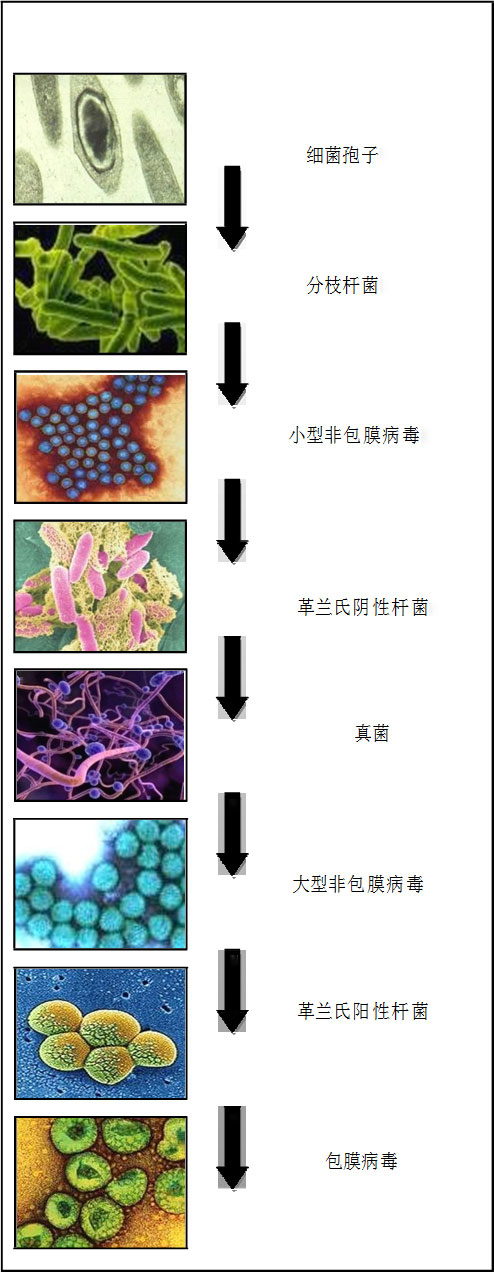
Hydrogen peroxide steam (HPV) is used as a biological disinfectant that has a wide range of applications that have a broad spectrum bactericidal and rapid inactivation of microorganisms. The HPV sterilization is characterized by no residual (which has only water and oxygen and oxygen) and only lower environmental temperatures, and the steam occurs increases the practicality of the sterilization process.
HPV has been sterilized for many organisms and different levels of organisms. Experiments have shown that HPV has a broad spectrum in the microorganisms including bacteria, viruses and fungi. The effectiveness of HPV is generally exported to a bacterial spore killing of the environmental surface, which is priorging that it can be repeated, and therefore it is located in the spAulding classification. The organisms listed in the document are classified in general (such as bacteria, viruses and
Reality real factTesting, the use of hydrogen peroxide steam (HPV) to sterilize the microbial to reach 6-Log of killing rate.
Testing biology and referenceout come outPlace place handle
Bacterial and bacterial spores
|
Biological type |
name |
referencesSomewhere |
|---|---|---|
|
Bacterial spore Gram-positive bacterium |
Bacillus Anthracnobacillus Crystallobacterium Cyclic Bacillus Strong Bacillus Huge bullobacillus Small sputum Bacillus Botulous clostridium Curable clostridia (difficult to resume closing) Piliforme Clostrichi Bacillus spore bracket Bacillus thermophilic fatty fat |
(1, 2) (3, 4) (3, 6) (1, 3, 6-8) (10, 11) (1, 6, 7, 9, 13, 14) |
|
Gram-positive bacteria |
Pediatric branch Mycobacterium tuberculosis Caesei Lactobacillus Monocyte increases Mysteria |
|
|
Gram-positive cocci |
Enterococcus (referred to as VRE) Golden S. Smectococcus (Abbreviation MRSA) Staphylococcus epidermis |
|
|
Enterus |
Yingu Escherichia Escherichia coli (referred to as O157: H7) Krebacillus Pig cholera Salmonella Pinellia Moorius |
(4, 11) (6, 21) (twenty two) |
|
Gram-negative bacilli |
No Bacillus (also called Bowman Selling) Armony Pseudomonasia |
(11, 15, 20) (6, 7) |
|
Typical bacteria |
Raisese no bileine (mycoplasma) | (twenty three) |
Virus virus
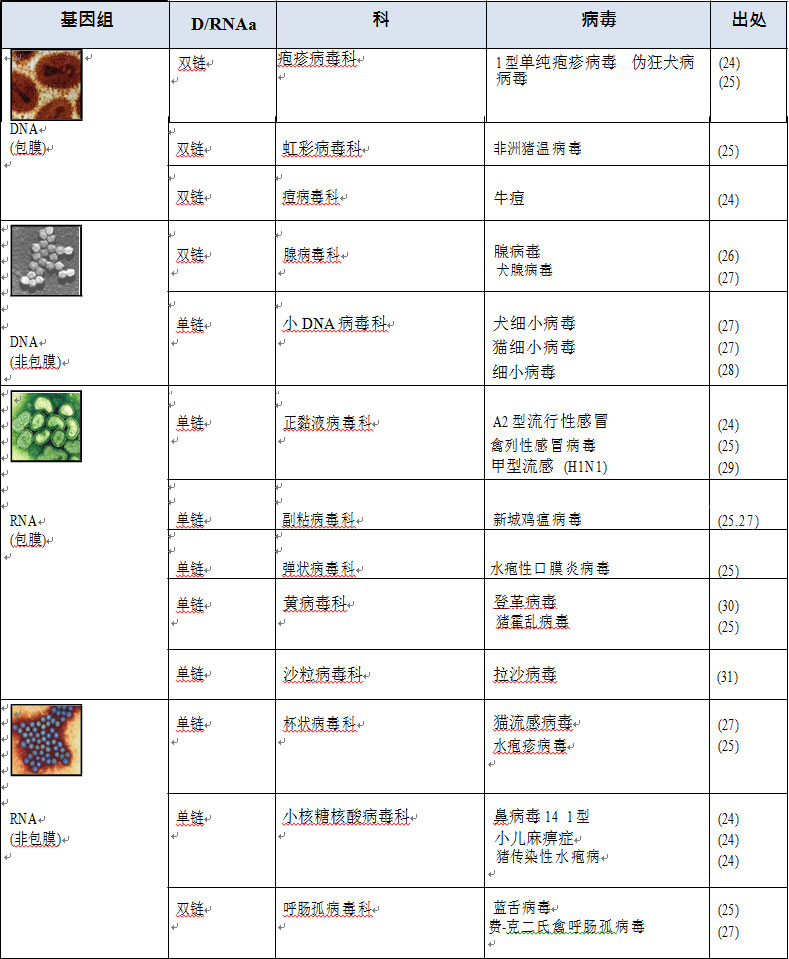
Phage

Fungi
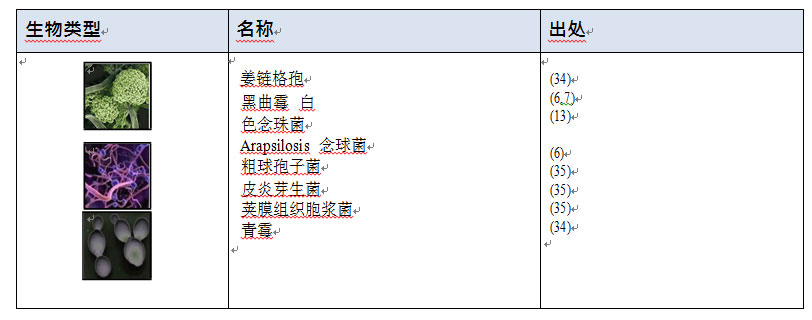
Nevati and native animals

other else
Evidence showed that HPV can inactivate the protein easily infectious particles (38).
Important Study showed that HPV plays a critical role in molecular biology applications (39).
referencesSomewhere
2. Reference / Source
Page 6 of 8
Case study from a room bio-decontamination at Imperial College School of Medicine.
2003. Contact Bioquell for further details.
Hall, L., J. A. Otter, J. Chewins, and N. L. Wengenack. 2007. Use of hydrogen peroxide vapor for deactivation of
Mycobacterium tuberculosis in a biological safety cabinet and a room. J.Clin.Microbiol. 45:810-815.
Technical Reports
HPV Biological Effectiveness
Page 7 of 8
French, G. L., J. A. Otter, K. P. Shannon, N. M. Adams, D. Watling, and M. J. Parks.
2004. Tackling contamination of the hospital environment by methicillin-resistant Staphylococcus aureus (MRSA): a comparison between conventional terminal cleaning and hydrogen peroxide vapour decontamination. J.Hosp.Infect. 57:31-37.
Otter, J. A., M. Cummins, F. Ahmad, van Tonder C., and Y. J. Drabu. 2007. Assessing the biological efficacy and
rate of recontamination following hydrogen peroxide vapour decontamination. J.Hosp.Infect. 67:182-188.
Jeanes, A., G. Rao, M. Osman, and P. Merrick. 2005. Eradication of persistent environmental MRSA.
J.Hosp.Infect. 61:85-86.
Dryden, M., R. Parnaby, S. Dailly, T. Lewis, K. Davis-Blues, J. A. Otter, and A. M. Kearns.
2008. Hydrogen peroxide vapour decontamination in the control of a polyclonal meticillin- resistant Staphylococcus aureus outbreak on a surgical ward. J.Hosp.Infect. 68:190-192.
Determination of the effectiveness of VPHP against methicillin-resistant Staphylococcus aureus,
Staphylococcus epidermidis and Bacillus stearothermophilus. Health Protection Agency (previously Centre for Applied Microbiology and Research),
Porton Down UK. 2001.
Assessment of the efficacy of vapour phase hydrogen peroxide as a room disinfectant. Health Protection Agency
(previously Centre for Applied Microbiology and Research), Porton Down UK. 2003.
Otter, J. A., S. Yezli, M. A. Shouten, A. R. van Zanten, G. Houmes-Zielman, and M. Nohlmans-Paulsen.
2010. Hydrogen peroxide vapor (HPV) decontamination of an intensive care unit to remove environmental reservoirs of multidrug-resistant
Gram-negative rods during an outbreak. Am.J.Infect.Control, accepted.
twenty one.
Bates, C. J. and R. Pearse. 2005. Use of hydrogen peroxide vapour for environmental control during a Serratia
outbreak in a neonatal intensive care unit. J.Hosp.Infect. 61:364-366.
twenty two.
Rogers, J. V., W. R. Richter, M. Q. Shaw, and Y. W. Choi. 2008. Vapour-phase hydrogen peroxide inactivates Yersinia pestis dried on polymers, steel, and glass surfaces. Lett.Appl.Microbiol. 47:279-285.
twenty three.
Otter, J. A., J. Chewins, D. Windsor, and H. Windsor. 2008. Microbiological contamination
in cell culture: a potential role for hydrogen peroxide vapour (HPV)? Cell.Biol.Int. 32:326-327.
twenty four.
Rickloff, J. R. 1990. Use of Vapourized Hydrogen Peroxide for the Bio-decontamination of
Enclosed Areas. Interphex USA Conference. New York.
Heckert, R. A., M. Best, L. T. Jordan, G. C. Dulac, D. L. Eddington, and W. G. Sterritt.
1997. Efficacy of vaporized hydrogen peroxide against exotic animal viruses. Appl.Environ.Microbiol. 63:3916-3918.
Adenovirus deactivation trials. Conducted in commercial confidence. 2003. Contact Bioquell for
further details.
Viral deactivation trials. Conducted in commercial confidence. 2002. Contact Bioquell
for further details.
McDonnell, G., Belete, B., Fritz, C., and Hartling, J. 2001. Room decontamination with vapour hydrogen
peroxide VHP for environmental control of parvovirus. American Association for Laboratory Animal Science (AALAS), Annual meeting. Baltimore, MD.
Technical Reports
HPV Biological Effectiveness
Page 8 of 8
Rudnick, S. N., J. J. McDevitt, M. W. First, and J. D. Spengler. 2009. Inactivating
influenza viruses on surfaces using hydrogen peroxide or triethylene glycol at low vapor concentrations. Am.J.Infect.Control. 37:813-819.
Investigation into the efficacy of hydrogen peroxide vapour in the bio-deactivation of Dengue virus. 2003.
Conducted in commercial confidence. Contact Bioquell for further details.
Otter, J. A., M. Barnicoat, J. Down, D. Smyth, S. Yezli, and A. Jeanes. 2010. Hydrogen peroxide vapor (HPV)
decontamination of an intensive care unit room used to treat a patient with Lassa fever. J.Hosp.Infect.in press.
Otter, J. A. and A. Budde-Niekiel. 2009. Hydrogen peroxide vapor: a novel method for the environmental
control of lactococcal bacteriophages. J.Food.Prot. 72:412-414.
Pottage, T., C. Richardson, S. Parks, J. T. Walker, and A. M. Bennett. 2010. Evaluation of hydrogen peroxide
gaseous disinfection systems to decontaminate viruses. J.Hosp.Infect. 74:55-61.
Information supplied with kind permission of Eli Lilly and Company, Indianapolis, Indiana.
Hall, L., J. A. Otter, J. Chewins, and N. L. Wengenack. 2008. Deactivation of the dimorphic fungi
Histoplasma capsulatum, Blastomyces dermatitidis and Coccidioides immitis using hydrogen peroxide vapor. Med.Mycol. 46:189-191.
Gustin, E. J., McDonnell, G. E., Mullen, G., and Gordon, B. E. 2002. The efficacy of vapour phase hydrogen
peroxide against nematode infestation: the Caenorhabditis elegans model. American Association for Laboratory Animal Science (AALAS), Annual meeting. San Antonio, Texas, USA
Krause, J. and Riedesel, H. 2002. Elimination of pinworm eggs from caging equipment with vapourised
hydrogen peroxide. Report from the Max-Planck-Institute for experimental medicine. Association for Laboratory Animal Science (AALAS) national meeting. San Antonio, Texas, USA
Fichet, G., K. Antloga, E. Comoy, J. P. Deslys, and G. McDonnell. 2007. Prion inactivation using a new gaseous
hydrogen peroxide sterilisation process. J.Hosp.Infect. 67:278-286.
DNA degradation studies. Conducted in commercial confidence. 2008. Contact Bioquell
for further details.

Scan it
